
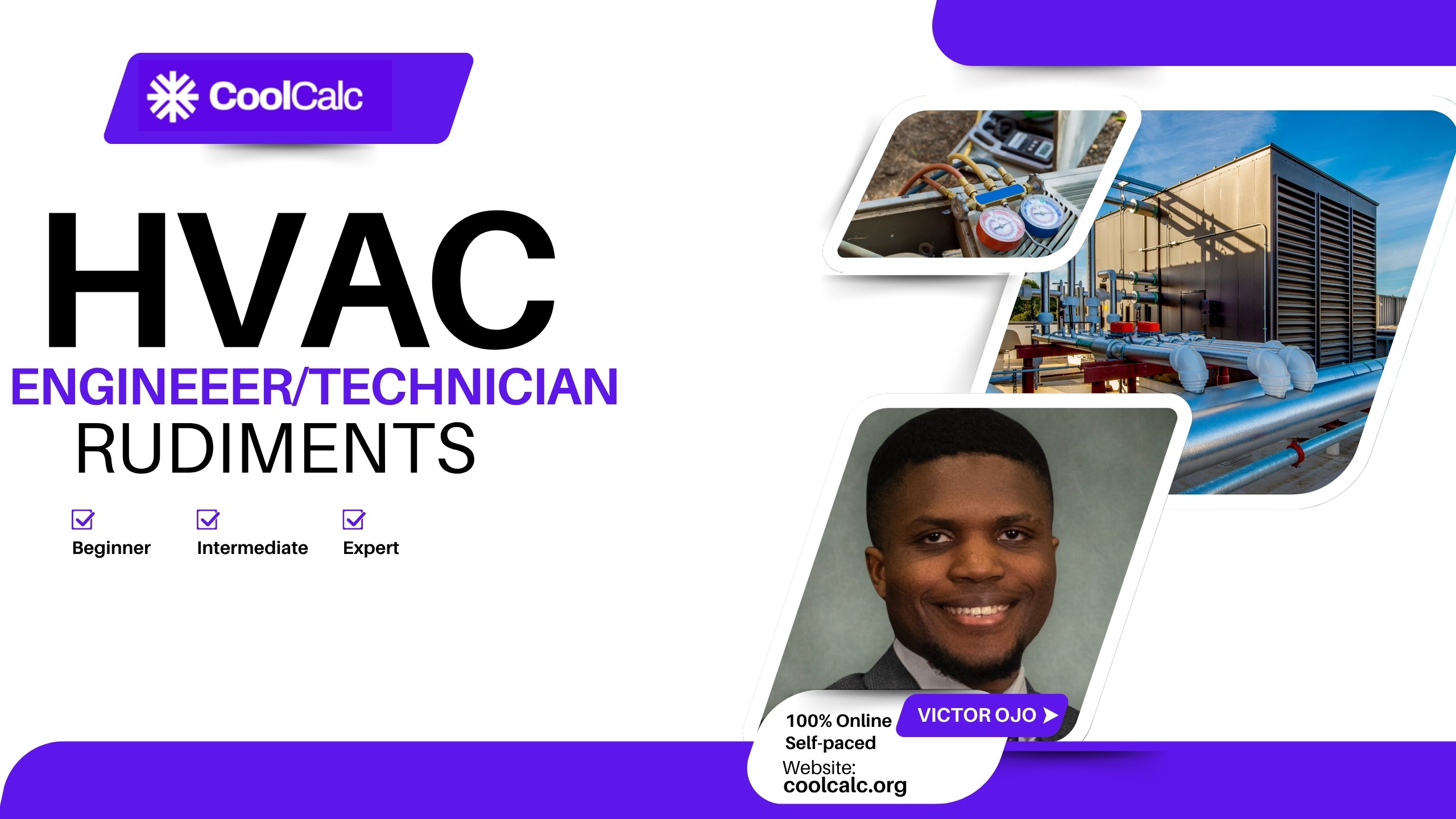
About Course
This comprehensive HVAC training program equips aspiring technicians and engineers with foundational to advanced knowledge in heating, ventilation, air conditioning, and refrigeration systems. Covering thermodynamics, system components, refrigeration cycles, airflow dynamics, electrical systems, safety protocols, system installation, diagnostics, and energy efficiency, the course blends theory with practical applications to prepare learners for real-world HVAC challenges across residential, commercial, and industrial settings.
Course Content
Part 1: Beginners Level
-
Module 1: Introduction to HVAC Systems
-
Module 2: Basic Thermodynamics for HVAC
-
Module 3: HVAC Components and Equipmen
-
Module 4: Refrigeration Cycles and Basic Principles
-
Module 5: Introduction to Airflow, Heat Transfer, and Pressure
-
Module 6: Basic Electrical Concepts for HVAC
-
Module 7: Safety Protocols and Industry Standards
Part 2: Intermediate
Level 3: Expert
Student Ratings & Reviews
A perfect guide for entry-level commercial engineers who need to understand how entropy management affects overall system operational efficiency. I finally understand the difference in operational placement between Air Handling Units (AHUs) and Rooftop Units (RTUs) thanks to Chapter 3. The detailed explanation of superheated vapor generation in the evaporator coil was key to passing my NATE refrigeration certification.
The direct correlation made between tenant comfort, building ventilation, and workplace productivity is highly useful for facilities management exams. Highly recommend this guide to anyone studying for their journeyman test; the thermodynamic fundamentals section is worth the price alone.
Excellent baseline material for apprentices. It sets the groundwork for complex refrigeration cycles without overwhelming the reader. The transition from basic climate comfort concepts to the actual thermodynamic formulas was handled smoothly and logically.
As a technician with ten years in the field, I found the breakdown of the basic thermodynamics laws in Chapter 2 to be an excellent refresher for my master license exam. The explanation of how heat transfer mechanisms such as conduction, convection, and radiation—impact the overall thermal load calculation changed how I look at system scoping entirely.